Monday, 1 October 2012

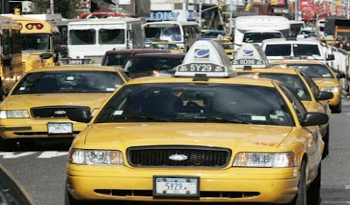
Honest Taxi Driver Rewarded $3 For Returning $10,000


If you were in the taxi driver`s shoe,what would you have done?...Or Let us put it this way,you knew you would be rewarded with a megre fee and well knew you would have to wait hours before meeting the owner of the bag that contained the money you are about returning,what would you do?...uhmmm...Read the Report below and see if their are lessons to be learnt from it.

A sum of 10 UAE dirhams (less than $3) was the reward received by an honest taxi driver, who returned a sum of 36,000 ($10,000) left behind by a passenger in the cab, a UAE daily reported.

“I have to admit I felt a little bad because I spent a lot of time trying to track the passenger down and even spent more than an hour waiting at our office for him to come and collect the money. But I would have returned the money with or without the reward, so it doesn’t matter,” UAE’s the Gulf News quoted the Pakistani driver, Shaaban Ali, as saying on Wednesday.

Ali discovered that the passenger, a Saudi, has left his bag behind, so he had to go in a few rounds looking for him, but he failed to find him, so he took the bag back to the office.

“The bag contained Dh36,000, the man’s passport and some other documents,” Ali said.

In an hour, the passenger was contacted and he came to the office to collect his belongings. “He told me thank you and handed me AED10,” Ali told the Gulf News.

According to the newspaper report Ali’s family — wife and parents — live back home in the Pakistani town of Kohat.

It was not the first incident to have taken place with drivers of the taxi company. Another Pakistani driver, Sajjad Arif, has recently returned valuable belongings to a Nigerian businessman.

“A laptop bag with 106,500 Nigerian Naira (AED 2,480), passport, laptop, blackberry, cheque books and watch was left behind in my cab,” Arif, who hails from Sialkot in Punjab, Pakistan, was quoted as saying.

“We are here to earn our money by working, and not to make easy money. No matter what I would not even consider for a second about holding on to someone else’s belongings,” he said.

Arif said that the next day the passenger collected his belongings and thanked him cordially. He added that he had returned back mobile phones and other belongings to passengers several times before.


Intresting!!! No matter the condition we find ourselves,honesty should always be our ultimate policy.

Should Independence have been delayed?


Nigerians from different walks of life express their minds on whether or not the country would have fared better if its independence, secured from British colonialists in 1960, had been delayed for national questions to be resolved
 We got independence at the right time – Senator Olufemi Lanlehin
This country got its independence at the right time with the right amount of struggle for freedom and independence by its emergent leaders. The country at independence was blessed with honest, educated and patriotic Nigerian leaders. Although they too, as human beings, had their faults, most of the enduring developments that Nigeria had were between 1951 and 1966.
The endemic corruption unleashed on all aspects of the society can be traced to the intervention of the military, particularly from 1985 till date. The major problem that Nigeria faces today is that of corruption and until this is successfully tackled Nigeria cannot move an inch forward.

We shouldn’t have got it on platter of gold — Samad Sanusi, a civil servant
 Maybe we would have fared better if independence had not been given us by our colonial masters on a platter of gold. I believe we would have been better able to manage ourselves if we had had the South African experience. I think we would have appreciated our freedom better than we do now. You can see the South Africans. Are the black majority not better now? Nigeria should learn from all these African countries and stop priding ourselves for nothing on the claim of being the giant of Africa when in actual fact we are nothing but a paper tiger.

We are not ripe for independence —  Adewale Rasaq, a graphics designer Rasaq
Our independence is not a very favourable one. Nigeria is a big mistake on the world map. We should be deleted and erased or joined with a successful country. I regret we fought for independence. It’s now I reason with the north who had said independence should be given not as soon as possible but as soon as practicable and as soon as we are capable of ruling ourselves. To be sincere we are not ripe for our independence, our leaders are unripe to rule us.

Delayed independence would have been a blessing — Vivien George, civil servant
I think a delayed independence would have made the difference for Nigeria. Take a look at South Africa: our youths go there to improve their standard of living. It is because the white men in South Africa did their best to develop the place. Though apartheid was a setback to the people of South Africa, we cannot wish away the fact that the government that was controlled by white men really developed the place. If the white men were to stay in Nigeria till 1990, it would have become a paradise on earth. A country without regular power supply, employment for its youths, medicare, standard education, good roads and industries can only be described as hell on earth. The security situation has worsened the whole matter.

 Delaying independence would have made us slaves — Alali Horsefall, human right activist
Nigeria would not have fared better if our independence was delayed. We would have been slaves in our country if the colonial masters were still around to manage our resources for us. The truth is that our governments have not been able to do things right. If you get it right as a leader in government, definitely, the people will be happy with you.
 Independence is good for us  — Ndubuisi Enechionyia, a chieftain of the All Progressives Grand
A lean freedom is better than fat slavery. Independence was good for us. After independence, we took off on a steady pace and each of the regions was doing relatively well until the military came in and set us back many years.
We were doing as well or even better than our peers were and some of our regions had economies growing as fast as any in the world. 1999 to date is our longest period of democracy since independence, and potential for greatness and development clearly abounds if we can get the right leadership. We are a one-problem country and they say a problem identified is half solved. That problem is corruption. It is at the root of all the deficiencies we have; from infrastructure to politics and election to ethnic violence to the economy to the judiciary etc. We have a leadership that is not willing to sacrifice for the progress of this country. We must sacrifice selves, friends, family, resources, and politics to be able to set this country on the proper path. Democracy requires a vibrant opposition, which is lacking here. We in the opposition parties are as bad as those we criticise. We have not been able to mobilise the people based on any policy direction on national issues, and the states we manage are no different from those of the PDP. Sacrificial leadership and vibrant purposeful opposition is lacking at all levels. 
Are the problems surmountable? Yes, yes and yes. My optimism stems from what has happened in Brazil, China, India, Ghana, etc. in the past two to three decades. They were drifting until leadership emerged that was ready to stand to be counted. Nigeria has gone several full circles of inept leadership and it is at that point in its political life where either we get it right or we should be ready for the consequences, some of which are manifesting already.

 It should have been  delayed – Nigerian Medical Association President, Dr. Osahon Enabulule
With the past and current socio-political experiences of Nigeria, it is indubitably clear that Nigeria would have fared better if the pro-independence crusaders and nationalists tarried a while to collectively settle the delicate questions surrounding the Nigerian state before rushing to achieve flag independence from Britain. Particularly, the basis of unity of the several nationalities ought to have been more critically resolved before moving ahead to agitate for independence. However, now that we have arrived at this stage of our national existence, we have no choice but to still come together on a transparent platform to resolve the Nigerian questions.

 Institutions faired better under British managers – Gbenga Kayode, a Master’s student of the Obafemi Awolowo University, Ile Ife
Facing the reality, Nigeria would have been better without independence. Independence should bring about happiness and an opportunity to manage one’s life. What happened in South Africa  is that the people endured colonialism, violence and repression for a long period to reap its fruit at independence. But independence has been a curse to Nigeria.
For instance, Oluwa Glass company in Ondo State was the largest glass producing company in West Africa. The economy of the areas was very good when the British managers were heading the company. The cases of NITEL  and many others are similar. What then do we call independence?
Over the years, Nigeria has faced a lot of challenges due to its inability to meet the peoples’ needs. In the last five and half years, the situation in the country has been so tense that the country lost a lot of her resources (human and material) to attacks (artificial  and natural disasters), like those from militancy to Boko Haram. Lives are no longer secure;  neither are properties secure. Some analysts traced these to the failure of the government in all areas of governance. What about the floods that swept away hundredth of people in Ibadan last year and the recent one at Lokoja? Celebrating independence, when we have woefully manifested our inability to manage our own affairs by ourselves,  is unfortunate for us. It also shows our ill-preparedness of another doomsday!

 We should hide our heads in shame  — Dr. Philip Ugbodaga, National Chairman, Coalition to Save Nigeria
We have nothing to celebrate after 52 years of flag independence. In 1960, we had powerful political leaders and statesmen with very robust pan-African credentials. Today, we see ourselves more from the veil and prism of ethnicity as Ibos, Hausas, Yorubas or Afenmai. The great heritage bequeathed to us by the sacrifices made by our founding fathers have been squandered by successive Nigerian leaders.
Although immensely blessed by God with amazing human and material resources, Nigeria is still grappling with challenges in virtually every sector. The agricultural sector is comatose, the industrial sector is dead and there are challenges in the power sector. We have no single healthcare centre of excellence in Nigeria. Our educational system is grounded. There is general infrastructural deficit. Indeed, Nigerians have over-subsidised the political leadership of this country in the past 52 years. Most Nigerians rely on personal boreholes for water, private educational institutions for sound education, and generators for light and so on.
It is heartbreaking and unimaginable for us to be celebrating Nigeria at 52 instead of mourning and soberly reflecting on how we all got it wrong. Instead of celebrating, we ought to hide our heads in collective shame and immediately get into a closet to fashion out how to put Nigeria on the path to national rejuvenation and recovery.
So, what really are we to celebrate at 52? Is it the fact that more than 75 per cent of the workable force is unemployed and no form of welfare scheme is in place for them? Or that we are still one of the only three countries in the world yet to eradicate the polio virus and the preferred destination for quality healthcare for most Nigerians is now India? Or the fact that Nigeria is the capital of corruption in the world?  So what is there to celebrate? Absolutely nothing!
 Independence is in order — Frank Ukonga, Director of Publicity, Mobilisation and Propaganda, Social Democratic Mega Party.
Independence came at the right time and it is in order. We have political and restive youth problems due to corruption, looting and indiscipline which can be addressed. Many great nations like US and Russia passed through this birth trauma in history. It was slavery and imperialism that underdeveloped us. So, it is proper as we liberated our people from bondage. We should step up our dedication to the Nigeria project through hard work, vision and sincerity.

Punch Nigeria

Prophet Detains Woman In A Room While Looking For Condoms


A self-styled prophet from Mbare was on Friday arrested after he 'detained' a married woman and locked her in his room while he went out looking for condoms!

Prophet Mataka Simon Magaya (37), of Chishawasha Flats was approached by Memory Mahachi who wanted some help. Prophet Mataka then instructed the woman to come to his house for consultation.

Narrating her ordeal, Memory said the 'man of God' told her that Holy Spirit said they should have séx.

"I visited Madzibaba Mataka at the grounds where he prayed for me. He then asked me to visit his house to received more prayers from his wife. I complied and when we got to the house he said the Holy Spirit had instructed him that he should have séx with me and take me as his wife. He said if I fail to comply, I would continue having marital problems and I refused. he then locked the door from outside and said he was going to look for condoms. I then tried to escape through the window in the second floor and that is when his neighbour saw me and came to my rescue," narrated memory.

She added that when Prophet Mataka came back, supposedly fully loaded with 'séxual balloons', neighbours were baying for his blood before the police came to his rescue. In his defence, Madzibaba Mataka said he locked her up for safety of his belongings. He confirmed that he wanted to have séx with Memory, adding that she had also agreed to have séx with him hence he had gone to look for condoms.

"I am a divorcee and I wanted Memory to be my wife so I left her in my room as I went to get condoms from a friend. I wanted protection since it was my first time with her. It took me long to find condoms that is why she attempted to leave my room. She had agreed to have séx with me as instructed by the Holy Spirit," said prophet Makata.

Memory had left her husband in Murehwa after a domestic dispute. She consulted Madzibaba mataka in a bid to solve the marital problems that she was facing. Mataka, who was dressed in his white robes was still detained at Matapi Police Station when our news crew left the scene.

Zimbabwe Media

National Address by President Goodluck Ebele Jonathan, GCFR, - *vows to ensure stable power supply


An Address by His Excellency, President Goodluck Ebele Jonathan, Gcfr, on the Occasion of the Independence Day Anniversary on Monday, 1stoctober, 2012
1.            Beloved countrymen and women, on this day, fifty-two years ago, our founding fathers brought joy and hope to the hearts of our people when they won independence for our great country. Nigeria made a clean break with more than six decades of colonial rule, and emerged as a truly independent nation. That turning point was a new beginning for our nation.
2.            Those who witnessed the lowering of the Union Jack and the emergence of the Green White Green flag continue to relish the memory, because that ceremony was not just about the destiny of a nation, but the future of a people.
3.            That future is here; we are the inheritors of a great legacy that goes even much farther into the past.
4.            The worthy patriots who made this possible were young men and women in their twenties and thirties. They worked together to restore dignity and honour to the Nigerian people. Their resolve united a multicultural and multilingual nation of diverse peoples, with more than 250 distinct languages and ethnic groups.
5.             In 1960, our diversity became a source of strength, and the new leaders resolved to carry the flag of independence for the benefit of future generations. They had their differences, but they placed a greater premium on the need to come together to build a new nation.
6.            It is that resolve, and that glorious moment that we celebrate today. We also celebrate the patriotism of our heroes past: Dr Nnamdi Azikiwe, Sir Abubakar Tafawa Balewa, Sir Ahmadu Bello, Chief Obafemi Awolowo, Sir Michael Okpara, Chief Anthony Enahoro, Herbert Macaulay, and several others who made the case for our independence.
7.            We remember as always, their contributions to the making of the Nigerian nation, and the efforts of their successors since 1960. We also celebrate the unfailing optimism and resilience of Nigerians who remain proud of our national identity.
8.            On this special day, I call on every Nigerian to remain steadfast, because our nation is indeed making progress. I call on every Nigerian to rediscover that special spirit that enables us to triumph over every adversity as a people:
9.            We weathered the storm of the civil war, we have refused to be broken by sectarian crises; we have remained a strong nation.  I bring to you today, a message of renewed hope and faith in the immense possibilities that lie ahead.
10.       Fellow citizens, I have an unshaken belief in the future of our great Country. I consider it a priority and sacred duty to continue to strengthen the bond of unity that holds our nation together and to promote and nourish the creative energies of our people. This is a central objective of our administration’s Transformation Agenda.  Nigeria, I assure you, will continue to grow from strength to strength.
11.       Since I assumed office as President of our dear country on the 6th of May 2010, I have continued to work with our countrymen and women to enhance our nation’s growth and development.
12.       Our vision is encapsulated in the Transformation Agenda. We are working hard and making progress on many fronts. We have cleaned up our electoral process; our elections are now globally acclaimed to be free and fair. Nigeria is now on a higher pedestal regarding elections.
13.       Over the past five years, the global economy has been going through a weak and uncertain recovery. During the same period and particularly in the last two years, the Nigerian economy has done appreciably well despite the global financial crisis. Nigeria’s real Gross Domestic Product (GDP) has grown by 7.1 per cent on average.
14.       It is also significant that the GDP growth has been driven largely by the non-oil sector. In pursuance of the main goals of the Transformation Agenda, a number of reforms and initiatives are being pursued in key sectors of the economy with a view to consolidating the gains of the economic growth.
15.       Our country’s power supply situation is improving gradually. We are successfully implementing a well-integrated power sector reform programme which includes institutional arrangements to facilitate and strengthen private-sector-led power generation, transmission and distribution.
16.       We have also put in place a cost-reflective tariff structure that reduces the cost of power for a majority of electricity consumers. I am pleased with the feedback from across the country, of improvements in power supply.
17.       We are continuing to improve and stabilize on our crude production volumes; our 12-month gas supply emergency plan, put in place earlier this year, has produced more than the targeted volumes of gas for power generation. A robust Petroleum Industry Bill (PIB) has been placed before the National Assembly. Its passage into law will ensure far-reaching reforms, transparency, accountability, increased government revenue and predictability for investors in the Oil and Gas sector.
18.       Several government programmes and projects are creating wealth and millions of job opportunities for our youth and general population. Such programmes include: You-Win, both for the youth and for the women, Public Works, the Local Content Initiative in the Oil and Gas Sector, and the Agricultural Transformation programme.
19.       We have improved on our investment environment; more corporate bodies are investing in the Nigerian economy. Our Investment Climate Reform Programme has helped to attract over N6.8 trillion local and foreign direct investment commitments.
20.       Nigeria has become the preferred destination for investment in Africa. It is ranked first in the top 5 host economies for Foreign Direct Investment (FDI) in Africa, accounting for over 20 per cent of total FDI flows into the continent. We have streamlined bureaucratic activities at the ports to ensure greater efficiency in the handling of ports and port-related businesses.  Specifically, we have drastically reduced the goods clearing period in our ports from about six weeks to about one week and under. We have an ultimate target of 48 hours.
21.        We have put in place, a new visa policy that makes it easier for legitimate investors to receive long stay visas. We have achieved a 24-hour timeline for registration of new businesses, leading to the registration of close to 7, 000 companies within the second quarter of 2012.
22.       The Manufacturers Association of Nigeria (MAN) has disclosed that, as at July 2012, 249 new members across the country had joined the Association, and that capacity utilization has also improved. The multiplier effect of this development on our job creation programme cannot be over-emphasized.
23.       In the last two years, we have put in place structures for an upgrade of the country’s health sector, to promote in every respect, the individual citizen’s right to quality, affordable and accessible healthcare.
24.       In this regard, we are devoting resources under the Subsidy Reinvestment Program (SURE-P) to reducing malaria incidents, dramatically reducing maternal and child mortality, and eradicating polio.
25.       Fellow Nigerians, in recent times, we have witnessed serious security challenges in parts of our country. We have taken pro-active measures to check the menace. This has included constant consultation and collaboration with our neighbours and other friendly nations on issues relating to internal and cross border security, and the sharing of information on smuggling and illegal dealing in small arms and light weapons.
26.       Our security agencies are constantly being strengthened and repositioned for greater efficiency. Many Nigerians have acknowledged that there has been a significant decline in the spate of security breaches.
27.       While expressing our condolences to the affected families, let me reiterate the commitment of this Administration to ensure the safety of lives and property of all Nigerians.
28.       Even as we remain focused on the issue of security, the fight against the scourge of corruption is a top priority of our Administration.  We are fighting corruption in all facets of our economy, and we are succeeding. We have put an end to several decades of endemic corruption associated with fertilizer and tractor procurement and distribution.  We have exposed decades of scam in the management of pensions and fuel subsidy, and ensured that the culprits are being brought to book.
29.       In its latest report, Transparency International (TI) noted that Nigeria is the second most improved country in the effort to curb corruption.
30.       We will sustain the effort in this direction with an even stronger determination to strengthen the institutions that are statutorily entrusted with the task of ending this scourge.
31.       I have given my commitment of non-interference in the work of the relevant agencies and I am keeping my word. What we require is the full cooperation of all tiers of government, and the public, especially civil society and the media.
32.       This Administration has also introduced for the first time in Nigeria’s history, a Performance Contract System for all Ministers, and other officials of government. This is to further place emphasis on performance, efficiency, and service delivery.
33.       Fellow Nigerians, our determined efforts on several fronts not-withstanding, our country still faces a number of challenges.
34.       Those challenges should not deter us. In the last few weeks, for example, many of our communities have been ravaged by floods, resulting in the loss of lives and property, and the displacement of persons.
35.       I want to reassure all affected Nigerians that I share in their grief, and our Administration is taking steps to address these incidents, in collaboration with the States and Local Governments.
36.       I have received the interim Report of the Presidential team that I set up to assess the flooding situation across the country.
37.       The Federal Government has taken measures to assist the affected States, while considering long term measures to check future reoccurrence.
38.       We must continue to work together, confidently and faithfully, to ensure that our country’s potentials are realised to the fullest; that our dreams are translated into reality; and that our goals are achieved.
39.       Let me reiterate that our administration is committed to the pursuit of fundamental objectives of an open society: the pursuit of freedom, security and prosperity for the Nigerian people, and the rule of law.
40.       In the next few days, I shall lay before the National Assembly the 2013 Federal Budget Proposal so that deliberations can commence in earnest on the key policies, programmes and projects that will mark a decisive year for our development and transformation.
41.       I have no doubt that by the time I address you on our next independence anniversary, many of our reform efforts would have yielded even better results.
42.       Over the years, several leaders have built on the foundation laid by our Founding Fathers. The baton is now in our hands. Let me assure all Nigerians that we shall not fail.
43.       I am confident that Nigeria will continue to be a source of pride to its citizens; to Africa and the Black Race and to humanity; a land that is known for progress, freedom, peace and the promotion of human dignity.
44.       May God bless the Federal Republic of Nigeria. May God bless you all.

Vanguard Nigeria

Photos: 2face And Uti Nwachukwu Among Others, Honoured By Oba Of Benin


Hardwork, perseverance and dedication to one’s art will always be recognized sooner or later. Not minding his relatively young age or state of origin, the Oba of Benin Kingdom, Oba Uku Akpolokpolo Erediauwa yesterday in Benin, Edo state gave honour to whom it was due as he recognized and honored African pop icon Innocent “2face” Idibia.  
The event which celebrated the ‘Oba of Benin as a Preserver’ was attended by a number of personalities including Big Brother Africa winner Uti Nwachukwu and Nollywood movie producer Lancelot Imaseun Oduwa amongst others.
The 37-year-old musician who was one of few personalities so honoured by the Oba, was given two wrist bands made of beads. A very excited 2face took to his Twitter page to show off his beads while he wrote;
‘Oba of Benin just gave me some royal beads! I’m so excited and honoured! One love 2 Benin kingdom’.

''Some Patriotic Naijas''....


With this picture one wonders how patriotic Nigerians are to have such a tattoo engraved on this guy's back.
The main question now is that is this a show of selfish display of tattoo or a declaration of patriotism?

Chinua Achebe: Nigeria is neither my mother nor my father, Nigeria is a child #Indepedence 52


But it has occurred to me that Nigeria is neither my mother nor my father. Nigeria is a child. Gifted, enormously talented, prodigiously endowed and incredibly wayward.
Nigerian nationality was for me and my generation an acquired taste – like cheese. Or better still, like ballroom dancing. Not dancing per se, for that came naturally; but this titillating version of slow-slow-quick-quick-slow performed in close body contact with a female against a strange, elusive beat. I found, however, that once I had overcome my initial awkwardness I could do it pretty well.
Perhaps these irreverent analogies would only occur to someone like me, born into a strongly multiethnic, multi lingual, multireligious, somewhat chaotic colonial situation. The first passport I ever carried described me as a “British Protected Person”, an unexciting identity embodied in a phrase that no one was likely to die for. I don’t mean it was entirely devoid of emotive meaning. After all, “British” meant you were located somewhere in the flaming red portion of the world map, a quarter of the entire globe in those days and called “the British Empire, where the sun never sets”. It had a good ring to it in my childhood ears – a magical fraternity, vague but vicariously glorious.
My earliest awareness in the town of Ogidi did not include any of that British stuff, nor indeed the Nigerian stuff. That came with progress in school. Ogidi is one of a thousand or more “towns” that make up the Igbo nation, one of Nigeria’s (indeed Africa’s) largest ethnic groups. But the Igbo, numbering more than 10 million, are a curious “nation”. They have been called names such as “stateless” or “acephalous” by anthropologists; “argumentative” by those sent to administer them. But what the Igbo are is not the negative suggested by such descriptions but strongly, positively, in favour of small-scale political organisation so that (as they would say) every man’s eye would reach where things are happening. So every one of the thousand towns was a mini-state with complete jurisdiction over its affairs. A sense of civic attachment to their numerous towns was more real for precolonial Igbo people than any unitary pan-Igbo feeling. This made them notoriously difficult to govern centrally, as the British discovered but never appreciated nor quite forgave. Their dislike was demonstrated during the Biafran tragedy, when they accused the Igbo of threatening to break up a nation-state they had carefully and laboriously put together.
The paradox of Biafra was that the Igbo themselves had originally championed the Nigerian nation more spiritedly than other Nigerians. One proof of this: the British had thrown more of them into jail for sedition than any others during the two decades or so of pre-independence agitation and troublemaking. So the Igbo were second to none on the nationalist front when Britain finally conceded independence to Nigeria in 1960, a move that, in retrospect, seems like a masterstroke of tactical withdrawal to achieve a supreme strategic advantage.
At the time we were proud of what we had just achieved. True, Ghana had beaten us to it by three years, but then Ghana was a tiny affair, easy to manage, compared to the huge lumbering giant called Nigeria. We did not have to be vociferous like Ghana; just our presence was enough. Indeed, the elephant was our national emblem; our airline’s was the flying elephant! Nigerian troops soon distinguished themselves in a big way in the United Nations peacekeeping efforts in the Congo. Our elephant, defying aerodynamics, was flying.
Travelling as a Nigerian was exciting. People listened to us. Our money was worth more than the dollar. In 1961 when the driver of a bus in the British colony of Northern Rhodesia asked me what I was doing sitting in the front of the bus, I told him nonchalantly that I was going to Victoria Falls. In amazement he stooped lower and asked where I came from. I replied, even more casually: “Nigeria, if you must know; and, by the way, in Nigeria we sit where we like in the bus.”
Back home I took up the rather important position of director of external broadcasting, an entirely new radio service aimed primarily at our African neighbours. I could do it in those days, because our politicians had yet to learn the uses of information control and did not immediately attempt to regiment our output. They were learning fast, though. But before I could get enmeshed in that, something much nastier had seized hold of all of us.
The six-year-old Nigerian federation was falling apart from the severe strain of regional animosity and ineffectual central authority. The transparent failure of the electoral process to translate the will of the electorate into recognisable results at the polls led to mass frustration and violence. While western Nigeria, one of the four regions, was going up literally in flames, the quiet and dignified Nigerian prime minister was hosting a Commonwealth conference to extricate Harold Wilson from a mess he had got himself into in faraway Rhodesia. But so tense was the local situation that the visiting heads of government had to be airlifted by helicopter from the Lagos airport into a secluded suburb to avoid the rampaging crowds.
Nigeria’s first military coup took place even as those dignitaries were flying out of Lagos again at the end of their conference. One of them, Archbishop Makarios of Cyprus, was in fact still in the country.
The prime minister and two regional premiers were killed by the coup-makers. In the bitter, suspicious atmosphere of the time, a naively idealistic coup proved a terrible disaster. It was interpreted with plausibility as a plot by the ambitious Igbo of the east to take control of Nigeria. Six months later, northern officers carried out a revenge coup in which they killed Igbo officers and men in large numbers. If it had ended there, the matter might have been seen as a tragic interlude in nation building, a horrendous tit for tat. But the northerners turned on Igbo civilians living in the north and unleashed waves of brutal massacres, which Colin Legum of the Observer was the first to describe as a pogrom. It was estimated that 30,000 civilian men, women and children died in these massacres. Igbos were fleeing in hundreds of thousands from all parts of Nigeria to their homeland in the east.
I was one of the last to flee from Lagos. I simply could not bring myself quickly enough to accept that I could no longer live in my nation’s capital, although the facts clearly said so. One Sunday morning I was telephoned from Broadcasting House and informed that armed soldiers who appeared drunk had come looking for me to test which was stronger, my pen or their gun.
The offence of my pen was that it had written a novel called A Man of the People, a bitter satire on political corruption in an African country that resembled Nigeria. I wanted the novel to be a denunciation of the kind of independence that people were experiencing in postcolonial Nigeria and many other countries in the 1960s, and I intended it to scare my countrymen into good behaviour with a frightening cautionary tale. The best monster I could come up with was a military coup d’état, which every sane Nigerian at the time knew was rather far-fetched. But life and art had got so entangled that season that the publication of the novel and Nigeria’s first military coup happened within two days of each other.
Critics abroad called me a prophet, but some of my countrymen saw it differently: my novel was proof of my complicity in the first coup.
I was very lucky that Sunday morning. The drunken soldiers, after leaving Broadcasting House, went to a residence I had recently vacated. Meanwhile I was able to take my wife and two small children into hiding, from where I finally sent them to my ancestral home in eastern Nigeria. A week or two later, unknown callers asked for me on the telephone at my hideout. My host denied my presence. It was time then to leave Lagos.
My feeling was one of profound disappointment. Not because mobs were hunting down and killing in the most savage manner innocent civilians in many parts of northern Nigeria, but because the federal government sat by and let it happen. The final consequence of this failure of the state to fulfil its primary obligation to its citizens was the secession of eastern Nigeria as the Republic of Biafra. The demise of Nigeria at that point was averted only by Britain’s spirited diplomatic and military support of its model colony. It was Britain and the Soviet Union that together crushed the upstart Biafran state. At the end of the 30-month war, Biafra was a vast smouldering rubble. The cost in human lives was a staggering two million souls, making it one of the bloodiest civil wars in human history.
I found it difficult to forgive Nigeria and my countrymen and women for the political nonchalance and cruelty that unleashed upon us these terrible events, which set us back a whole generation and robbed us of the chance, clearly within our grasp, to become a medium-rank developed nation in the 20th century.
My immediate response was to leave Nigeria at the end of the war, having honourably, I hoped, stayed around long enough to receive whatever retribution might be due to me for renouncing Nigeria for 30 months. Fortunately the federal government proclaimed a general amnesty, and the only punishment I received was the general financial and emotional indemnity that war losers pay, and some relatively minor personal harassment. I went abroad to New England, to the University of Massachusetts at Amherst, and stayed four years and then another year at the University of Connecticut. It was by far my longest exile from Nigeria and it gave me time to reflect and to heal somewhat. Without setting out consciously to do so, I was redefining my relationship to Nigeria. I realised that I could not reject her, but neither could it be business as usual. What was Nigeria to me?
Our 1960 national anthem, given to us as a parting gift by a British housewife in England, had called Nigeria “our sovereign motherland”. The current anthem, put together by a committee of Nigerian intellectuals and actually worse than the first one, invokes the father image. But it has occurred to me that Nigeria is neither my mother nor my father. Nigeria is a child. Gifted, enormously talented, prodigiously endowed and incredibly wayward.
Being a Nigerian is abysmally frustrating and unbelievably exciting. I have said somewhere that in my next reincarnation I want to be a Nigerian again; but I have also, in a rather angry book called The Trouble with Nigeria, dismissed Nigerian travel advertisements with the suggestion that only a tourist with a kinky addiction to self-flagellation would pick Nigeria for a holiday. And I mean both.
Nigeria needs help. Nigerians have their work cut out for them – to coax this unruly child along the path of useful creative development. We are the parents of Nigeria, not vice versa. A generation will come, if we do our work patiently and well – and given luck – a generation that will call Nigeria father or mother. But not yet.
Meanwhile our present work is not entirely without its blessing and reward. This wayward child can show now and again great intimations of affection. I have seen this flow towards me at certain critical moments.
When I was in America after the Biafran war, an army officer who sat on the council of my university in Nigeria as representative of the federal military government pressured the university to call me back home. This officer had fought in the field against my fellow Biafrans during the war and had been seriously wounded. He had every right to be bitter against people like me. I had never met him, but he knew my work and was himself a poet.
More recently, after a motor accident in 2001 that left me with serious injuries, I have witnessed an outflow of affection from Nigerians at every level. I am still dumbfounded by it. The hard words Nigeria and I have said to each other begin to look like words of anxious love, not hate. Nigeria is a country where nobody can wake up in the morning and ask: what can I do now? There is work for all.
Culled from Ynaija

Is Their Just Too Much Sex Business In Lagos?


Recently on radio, there was a debate on the increase of séx business in Lagos and other Cities. The debate brought much controversy as women and men of all walks of life blamed each other on air.

In Lagos, men are busy buying pénis enlargement drugs to enhance their vitality and keep up with women’s vibrators and séx toys...

Apparently most women who called to air their views think men have failed them in doing their job in bed and need the drugs to keep up with women’s séxual hunger.

The blame game continued as men claimed that women view them as useless if they do not meet their standards in bed, mostly by size and vitálity. Some women were actually quoted to have called their husbands “useless”.

Who is to blame for the booming ‘Help For Men’ businesses?

Boy Seen Having Sex With His Mom ...Caught in the Act


A Zimbabwe local court acquitted a boy of charges of ráping his father’s wife after the plaintiffs retracted their earlier statements. The unnamed boy had been on trial following charges by his father that he had ráped his wife for nearly two years under persistent threats.

The man told court that he learned of the rápe after his sister-in-law said she saw him and his wife in an obscene act inside her bedroom. The father admitted that he beat up his son after confessing to having a relationship with his wife, who is nine years older than his son.

Newspapers said the court on Tuesday acquitted the son after both the father and his wife retracted the charges...

Photo: Rihanna Performs without panties


This is Rihanna performing at The iHeartRadio Music Festival at the MGM Grand Garden Arena in Vegas on September 21, 2012.
What do you say they should start putting ‘not for audiences younger than 18′ on tickets for shows where artists will be dressed this way. Or is this the definition of ‘sexy’?

Female Student Stripped And Molésted For Stealing


Some students of the University of Ghana are reported to have molésted a lady who allegedly posed as a student and stole phones and laptops at the university..

Photos: Nasty ways Nigerian girls celebrate independence


So many pictures of Nigerian ladies celebrating independence have been flying around but these ones seem to be exceptional and we think you just have to see this to know many ladies want to celebrate in their own ways. ..

Who should be given the first position?

Photo: Ashafa Cynthia displays her umbrella nipple


Sometimes one just cannot help but wonder which planet some of these ladies come from. This is far from a photoshop, but one has to just wonder how real this is, and from what parents one gets this kind of features...

What is your take on this?

Serious Contention: Davido Piled Up N500,000 Club Bill On Wizkid And Bailed


Davido  might deny the brewing cold war going on between him and Wizkid and even tell everyone who cares to listen that the Pakurumo singer is his ‘brother’ but insider sources say that is far from the truth...
Before Davido bursted into limelight, he and Wizkid were unknown to each other but that soon changed once Davido also became a household name and they both got to meet and struck a chord of friendship until sometime in May when the cordial relationship went sour.
According to an insider who knows the duo well and the source of their no-love lost relationship, Wizkid was chilling at a hotel somewhere on the Island and apparently wasn’t having a great time so he decided to put a call through to his friend, Davido who at the time was hanging out with five other friends of his. The Omo Baba Olowo then instructed his aide to go and pick Wizkid at a hotel behind 1004 building on VI.
In no time, Wizkid had joined Davido and his group of friends at a club in the civic centre where they had some drinks before carrying the party to Movida on Idowu Taylor, VI. While there, Davido ordered some bottles of Hennessey for himself and two other friends who had just joined them and as they drank, Wizkid became tipsy and frail as he had one drink too many on the night.
Immediately, he was carried to Davido’s car parked outside where he allegedly threw up. All this while, Davido was nowhere to be found as he abandoned his colleague and friend.
After a while, the bar tenders produced the bill which was about N500,000 and since Davido had disappeared into thin air and bulking under pressure to pay the bills, Davido’s aide took the bar tenders to Wizkid’s home where he was forced to issue a cheque to cover their unpaid expenses.
This singular act put a strain on their relationship as Wizkid felt let down by Davido. Already, their relationship had been tested following the bitter break-up of Mo’Hits as both artistes had their allegiances divided between Don Jazzy on one hand, and Dbanj on the other.
But what would finally prove to be the proverbial straw that broke the camel’s back was when Davido was sending out invitation to guests for the launch of his O.B.O Album and he didn’t send any to Wizkid. And to add salt upon injury, Davido and his crew  reportedly sauntered out on a Wizkid performance to the consternation of many at the NEA couple of weeks back in New York.
With these series of events coupled with Davido’s denial and Wizkid’s obvious silence in the face of all the ‘beef’ rumor, isn’t obvious that all is not well between these two super stars? On Wizkid’s part, could this be the moment when ‘silence is golden?’ Time will tell.
Culled From THISDAY
Related Posts Plugin for WordPress, Blogger...